
Introduction to Git and GitHub
Many people mistake Git and GitHub for the same thing, but they are two different things.
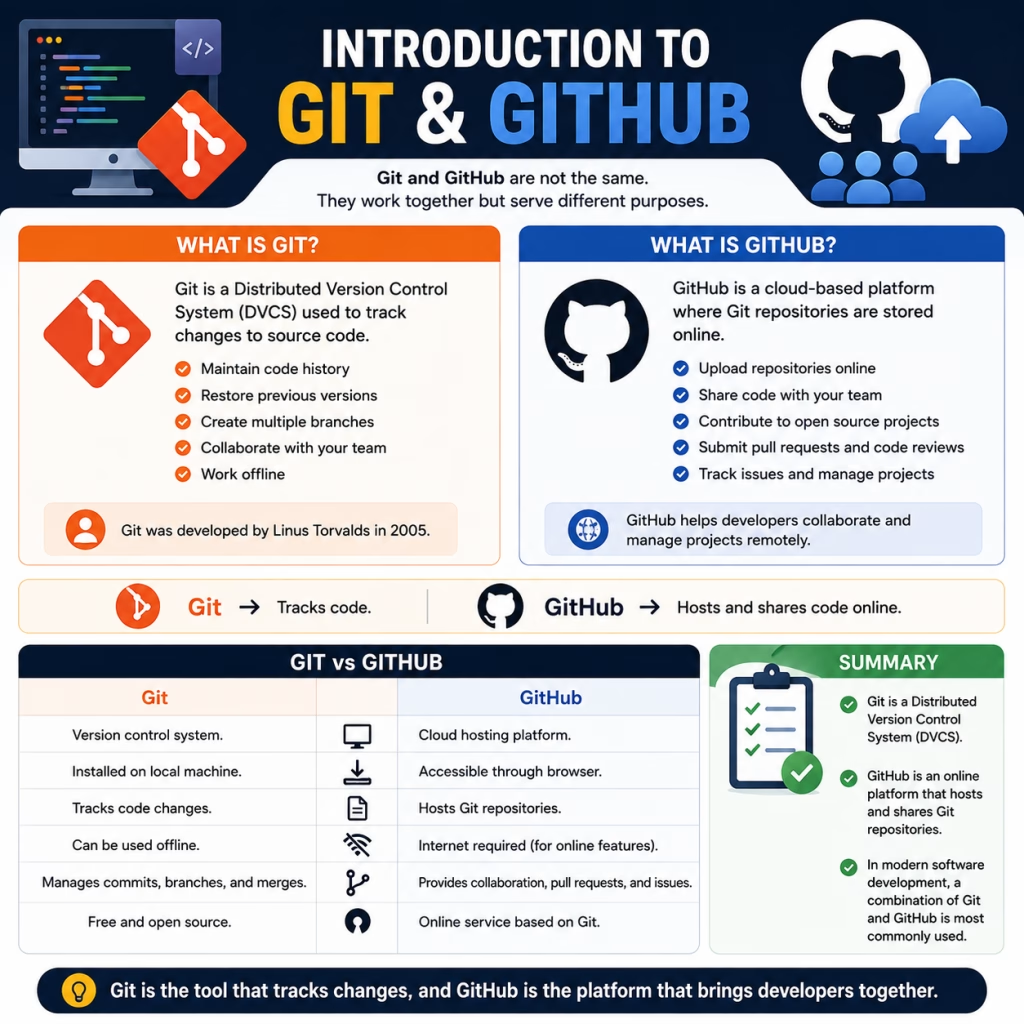
What is Git?
Git is a Distributed Version Control System (DVCS).
It is used to track changes to source code.
With Git, you can:
- Maintain code history.
- Restore previous versions.
- Create multiple branches.
- Collaborate with your team.
- You can also work offline.
Git was developed by Linus Torvalds in 2005.
What is GitHub?
GitHub is a cloud-based platform where Git repositories are stored online.
GitHub allows developers to:
- Upload repositories online.
- Share code with their team.
- Contribute to open source projects.
- Submit pull requests and code reviews.
- Track issues.
- Manage projects remotely.
In simple terms:
Git → Tracks code.
GitHub → Hosts and shares code online.
Git vs GitHub
| Git | GitHub |
| Version control system. | Cloud hosting platform. |
| Installed on local machine. | Accessible through browser. |
| Tracks code changes. | Hosts Git repositories. |
| Can be used offline. | Internet required (for online features). |
| Manages commits, branches, and merges. | Provides collaboration, pull requests, and issues. |
| Free and open source. | Online service based on Git. |
Git = Version Control Tool
GitHub = Platform for storing and sharing Git repositories online
Summary
- Git is a Distributed Version Control System (DVCS).
- GitHub is an online platform that hosts and shares Git repositories.
- In modern software development, a combination of Git and GitHub is most commonly used.